

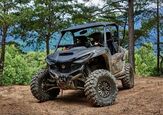
Best SXS and Golf Cart Heaters: 6 Ways to Stay Warm

Cold-weather riding comes down to one question: how does the heat get into your lap? There are four honest answers, and each fits a different kind of rig. A coolant-loop heater pulls hot coolant off the engine, pushes it through a compact heater core, and fans cab air over that core. A propane unit burns fuel for radiant warmth. An electric panel converts battery power to heat. And a diesel air heater burns its own fuel in a sealed chamber. The right pick depends on whether your machine has an engine making waste heat, an enclosed cab holding air, and electrical capacity to spare.
Before you buy, match the heater to the cab. A coolant-loop heater only earns its keep when the cab has doors and a windshield that genuinely trap warm air. A seat heater or a clip-in propane unit makes sense on an open or soft-door rig that no cab heater can warm. Keep that in mind as you read through the six options below.
1. Ice Crusher RZR Pro XP / Pro R / Turbo R Cab Heater Kit
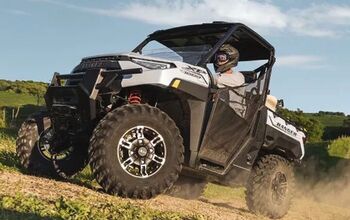
This is the heavy hitter for an enclosed Polaris RZR. It's a coolant-loop heater with defrost. Rated at 14,600 BTU and 180 CFM, it routes warmth through six adjustable vents so you can spread it where you want it. Because it taps engine coolant, the only electrical draw is the fan, so it won't drain your battery. One kit covers the Pro XP, Pro R, and Turbo R in both two-seat and four-seat versions. It starts from $499.99 and carries a three-year warranty on the kit, electrical parts included. The trade-off is installation. Ice Crusher estimates 4 to 8 hours, the unit bolts against the passenger-side firewall, and specialty install tools ship in the box. Note that it isn't compatible with the Rockford Fosgate subwoofer.
2. SuperATV Ranger XP 900 Cab Heater
For a work-focused Ranger with a hard cab, SuperATV's coolant-loop kit delivers steady, no-flame heat all day while you tend chores. It's rated at 14,600 BTU and 135 CFM, runs defrost, and fits the Ranger XP 900 and XP 900 Crew. There's a second-row heater option if you keep passengers in back. At $445.95 to start, it undercuts the Ice Crusher kit on price. The catch is that installation requires drilling, so this is a permanent fixture, not something you move between machines. A companion kit for the RZR XP 1000 and XP 4 1000 runs the same way, with a blower drawing just 3.4 amps at 13.7 volts and a coolant tap at install.
3. Mr. Heater MH4GC Portable Propane Heater
This one started life as a golf cart heater and gets adapted for UTVs and side-by-sides able to carry a small propane cylinder safely. It mounts in a standard cup holder, and there's no wiring or drilling involved. It puts out 4,000 BTU of radiant heat, with run time reaching 5.5 hours on a single 1-lb cylinder, per Mr. Heater's own product page. What sets it apart from cheaper cup-holder units is safety gear. It carries an oxygen depletion sensor along with a tip-over switch that trips at 90 degrees, both built for open-sided vehicles instead of sealed rooms. It also has a wind-resistant burner. At roughly $99.99 to $139.56, it's affordable and portable, and it stores easily in the off-season. The limit is scope: it's best for spot-heating a driver or passenger, not whole-cab climate control. If you're tempted by a cheaper match-light cup-holder unit around $84.95, know that those lack an ODS and tip-over switch entirely, and that protection is not universal on propane heaters.
4. Heater Craft G200X Electric Golf Cart Heater
When a cart is wrapped in a full vinyl or hard-sided enclosure zipped up tight, a flame-free unit matters more, and that's where this hardwired electric heater shines. It wires directly into a 36V or 48V battery pack. The manufacturer rates it to produce up to 4,500 BTU. Because it burns no fuel, there's nothing to refill and no exhaust to route. It runs about $335 and is the stronger choice for carts with a hard cab or full enclosure. The downside is a permanent install: you drill a mounting bracket and run power leads back to the pack. And since it draws heat from the pack, higher output pulls more current, which shortens your range between charges.
5. Kohree 48V 400W Carbon Fiber Heater
If you want electric warmth without the permanent wiring project, this is the simpler clip-in route for a 48V cart. Its 400W carbon-fiber element sits on a head that swivels a full 360 degrees, and it warms up in roughly 2 to 3 seconds, per the manufacturer. It wires into a 48V pack and draws about 8.3 amps continuously. At around $90.99, it's the budget electric option. Just set expectations on output: that 400W element works out to roughly 1,365 BTU/hour, about a third of what a propane heater puts out. It's a lower-output but simpler option for taking the edge off, not for heating a sealed cab in deep cold.
6. Tusk Seat Heater Kit
For soft-door and fully open rigs that no cab heater can warm, heat the one surface you're always touching. This electric seat heater installs under the seat cover and connects to the battery, with a 50-watt pad offering high and low settings and a maximum temperature of 158°F. It fits most UTV seats, starts from $39.99, and is sold per seat, so you can add one for a passenger. It won't warm the air around you, but on an open machine where air heating is a lost cause, it's the practical answer.
How to Choose
Start with your cab. If it has doors and a windshield that hold air, and your machine makes engine heat, a coolant-loop kit like the Ice Crusher or SuperATV gives you the most warmth with the least battery drain, since these don't make heat from the battery. The trade-off is a multi-hour install and a permanent fixture.
On an electric cart with a hard enclosure, the Heater Craft G200X avoids fuel altogether, though it needs hardwiring and eats into your range. For flexibility, a propane unit like the Mr. Heater MH4GC or a clip-in electric like the Kohree moves between machines and stores away easily, trading some output and, in propane's case, fuel handling for simplicity. And on any open or soft-sided rig where heating the air is hopeless, the Tusk seat pad is the cheapest way to stay comfortable where it counts.
Beyond these six, larger enclosed cabs can justify a diesel air heater, but those call for fuel plumbing, exhaust routing, and secure mounting, with professional installation recommended to avoid exhaust and carbon monoxide risk. For most riders, matching one of the options above to your cab and electrical system is the simpler, safer path to a warm trail.

More by ATV.com Staff










Comments
Join the conversation