
How to Pick Rugged-Terrain Tires Without Overbuying

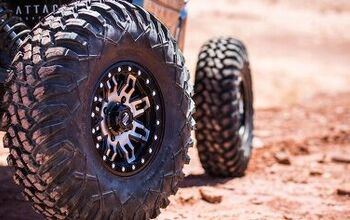
If you run a machine for chores and recreation both, rugged-terrain tires will tempt you every time you shop. They sit between all-terrain (A/T) and mud-terrain (M/T) products, striking a compromise between trail capability and pavement manners. For ranchers hauling feed, hunters reaching a back-forty blind, or trail riders who still log highway miles, that middle ground can be the sweet spot. These tires carry deep tread, a rugged design, and sidewalls built up for strength. The result is a more aggressive look and better loose-surface grip than a standard all-terrain tire.
But the middle ground is also where buyers make costly errors. The spend is real. In a single recent year, owners of pickups and SUVs poured more than $2 billion into tires built for off-road use and into oversized sets, according to the Specialty Equipment Market Association. Yet only about a quarter of pickup accessorizers said they take their rigs off the pavement, the group's latest report found. Below are four mistakes to avoid. As John Hagan, who leads sales at Nexen Tire America, puts it, "customers are asking their tires to do more, but the differences among tire categories are not always clear."
1. Buying for Looks Instead of Use
The most common trap is choosing tires based on appearance rather than performance. Big tread blocks, deep voids, and chunky sidewalls deliver the trail-ready image so many owners want, but aggressive tread alone does not determine whether a tire is the right fit. The fix is to be honest about how you actually use the machine, then pick the tire that strikes the best balance of grip, comfort, durability, and carrying capacity, rather than defaulting to the most aggressive tread on the shelf.
The owners who fall for this are the ones drawn to the look of a mud tire they will rarely need. If your machine spends most of its life on pavement and gravel, the trade-off is steep: aggressive tires run on paved roads speed up wear, increase braking distances, create unnecessary noise, drain fuel faster, and affect ride quality. Performance should drive the decision.
2. Picking More Off-Road Capability Than You Need
Moving up the aggressiveness ladder feels like an upgrade, but A/T, R/T, and M/T designs do not line up as rungs on a single performance scale. Stepping from A/T through R/T to M/T will not sharpen every part of how a tire behaves. Each step toward the trail gives up something on the road.
Buying a tire built for the worst conditions you might ever meet costs you in daily use. It hurts the quiet of the ride, the comfort, and the tread life, mile after mile. The compromises stack up in wet braking, highway noise, ride comfort, tread wear, and fuel use. This matters most for the daily-driven truck that sees campsites, jobsites, or moderate trails. For that use, an A/T design is often the better match, while a rig dedicated to the trail may truly call for an M/T tire. The practical move is to match the tire to the terrain you actually encounter. All-terrain tires blend smooth pavement behavior with real traction on gravel, back roads, jobsites, campgrounds, and easy trails, and the rugged-terrain type stays more livable day to day than a tire built purely for mud. Unless your build is a race truck or an extreme rock crawler, your real choice is between all-terrain and mud-terrain.
Keep the categories straight. Mud-terrain tires are made first for deep mud, loose ground, rocks, and demanding trails, using large tread blocks and wide voids that eject mud, sand, and soft soil. They are not quiet or fuel-efficient. All-terrain tires, by contrast, ride more smoothly, run quieter, and steer better on pavement. They suit a 4x4 that tows or pulls daily duty, they handle winter roads where traction matters, and they shine on long-haul overlanding and expedition trips.
3. Ignoring Load Capacity
Plenty of owners obsess over tread pattern and never check whether the tire can carry the weight. Many fixate on tread design and skip the question of whether a tire can bear the vehicle's weight and cargo demands. For anyone who hauls feed, tows an implement, or carries equipment, this is the mistake that bites.
Drivers who regularly carry heavy loads should choose tires with strong load-carrying capacity and improved stability. Set the load range to meet both the maker's specs and your real payload and towing needs. Load range reflects how a tire is built and how much it can carry, not simply how tough it is. More load range does not, on its own, serve every machine better. Heavier-duty construction supports towing and hauling but adds mass and takes a toll on ride comfort, steering feel, and fuel economy. The safety stakes are serious: exceeding a tire's load limit can cause tread separation, blowouts, and longer braking distances. Check the tire's load limit against your machine's rated weight, listed in the owner's manual and on the vehicle's load label.
A related error is downgrading your tire type entirely. Some rigs leave the factory on tires chosen to meet fuel economy targets rather than to work hard, and those are not built for off-roading. Dropping down to a lighter passenger-rated tire strips away the load capacity and durability you need, while a light-truck-rated tire is stronger and ready for towing, hauling, and the abuse of the trail.
4. Getting the Size and Fitment Wrong
Fitment is where enthusiasm outruns engineering. A common misconception is that if tires fit, they are suitable for the road, but fitting larger-than-stock tires can mean new brake lines, a revised steering setup, and changes to the suspension, and often calls for aftermarket modifications like a lift kit. Bigger tires can impact handling and increase rollover risk.
Mismatched tires carry a long list of consequences, affecting handling, load rating, braking, suspension, speed readings, and fuel economy. Modern machines rely on wheel speed sensors feeding ABS, traction control, and electronic stability control, and a tire that strays far from the maker's recommendations can feed those systems bad data or let them fail when you need them. Find the recommended dimensions in your owner's manual or on the placard at the driver-side door. When you upgrade size, consult a specialist for fitment and clearance.
It helps to know the sizing systems. Most off-road tires fall into LT-metric or high-flotation, which follow completely different sizing systems. High-flotation tires use a simpler sizing format and shine on soft ground such as sand, mud, or snow, where the larger footprint keeps the machine from sinking.
Keep the Air Right and the Alignment True
Even the correct tire underperforms when neglected. Correct pressure extends tire life, improves traction, and optimizes control, and it directly affects handling, traction, and tread life. For original-equipment tires, the manufacturer's recommended PSI appears in the owner's manual and on the tire placard. Pack a dependable pressure gauge and a portable air compressor before you head out on the trail.
Alignment deserves the same attention because it is easily knocked out after trail time. Proper alignment helps tires wear evenly and keeps the vehicle tracking straight on and off road.
How to Choose
Start by evaluating your driving habits honestly: how much time on highways, gravel, city streets, or trails. Match the tire's capabilities to your actual conditions, then compare specifications, performance reviews, and traction ratings before buying. If you commute mostly on pavement and only occasionally venture off-road, a set of aggressive rugged-terrain tires is a poor use of money. If you split time between trails and the highway, all-terrain tires are the natural choice for mixing trail time with highway commuting. Understanding your driving habits, correct size, and load capacity is the surest way to avoid an expensive replacement down the road.

More by ATV.com Staff






Comments
Join the conversation